Data can surface what’s happening across your organization. Listening reveals why it matters, and where your values are being lived or lost in the flow of work.
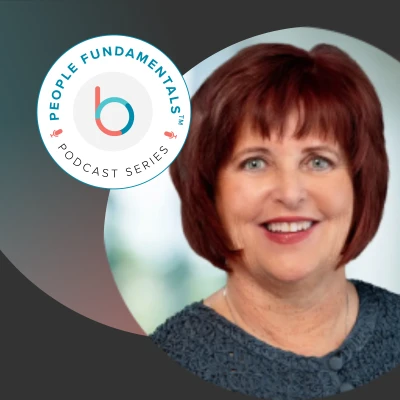
Understanding that dynamic helped Margaret Keane move Synchrony from #75 to #2 on the Great Places to Work list while scaling the business past $100 billion in total assets. She’s now applying the same people-centered, data-driven approach in her role as CEO of Cisive, a global background screening company where trust and employee experience are core to the business.
In this episode of the People Fundamentals podcast, Margaret shares how she uses people data to assess cultural health and why building high-performing teams depends on closing the gap between what leaders say and what employees experience. “It’s great to have values … but if you’re not living them as a company or as leaders, then it’s kind of meaningless.”
Subscribe wherever you listen to podcasts: Apple Podcasts | Spotify | YouTube Music
Use people data to pinpoint gaps and opportunities
At Synchrony, Margaret used the Great Places to Work survey to understand how her employees rated the company on three critical questions that predict organizational performance. The open-ended comments revealed what the scores couldn’t, like where employees felt stuck, what leaders were missing, and which teams needed support.
She zeroed in on how employees felt about their immediate manager, whether leadership followed through on commitments, and if daily work reflected company values. “You could really look at that by team leader, by location, by different organizations within your company, and you could really see where you have gaps.”
Then, they built and executed action plans by team, by leader, and by location. The return was measurable: lower turnover, stronger customer service, and higher productivity.
Close the loop while it still matters
Listening well means acting on what you hear — not months later, but when it matters.
That belief guided Margaret’s team during the pandemic, when uncertainty was high and employees needed support in real time. They started by running pulse surveys to understand what people were struggling with most.
Employees asked for more communication and help balancing work with kids at home. Within weeks, leadership launched global town halls with a medical officer and created online camps where employees’ children could join cooking classes, crafts, and story time across geographies.
Taking action quickly tightened connections across the company and made employees feel seen.
That single survey and action led to a tighter-knit culture and gave employees both a sense of relief and a feeling of being valued. “People got to meet families that they normally would have never met through the online camp,” she says. “They just got to engage very differently.”
Make decisions even when the data is incomplete
Leaders rarely have perfect information. What matters is creating a culture where teams can move with confidence even when the path is only partially visible.
“You may not have the full data, but … you have to have the rationale around what you’re trying to do,” she says. Instead of waiting for certainty, she expects people on her team to share their reasoning, invite debate, and build alignment before moving forward. That transparency gives people permission to take thoughtful risks and course-correct quickly.
At Synchrony, that meant trusting early signals from experts even when the models didn’t yet point in a clear direction. “Sometimes it doesn’t appear that clearly. It’s more the person’s experience plus a little bit of data,” she says. Acting on that combination helped the company tighten or loosen credit ahead of competitors and stay resilient through economic swings.
That principle translates beyond financial risk decisions. When leaders can explain the “why,” welcome different points of view, and move without having every variable nailed down, employees feel safer contributing their own imperfect perspective.
Margaret’s experience shows that the real power of people data comes from how leaders use it. When employees see that their feedback shapes decisions and that leaders are willing to move forward even without perfect information, trust grows. And in high-trust cultures, performance follows.
People in This Episode
Margaret Keane: LinkedIn
Transcript
Expand
Margaret Keane:
I’m a big believer that employees have to feel good about coming to work every day. And I think with that, you get a couple of things. You get, I think, a better customer experience. Because if they’re feeling good coming in and feeling like they’re valued, they’re going to treat that customer if they’re a call center person, for example, on the phone in a good way, in a different way, and really feel good about their job. The others measure leadership and how leadership is doing in terms of their behaviors and how they’re treating their employees.
Michelle Gouldsberry:
Margaret Keane, thank you so much for joining the People Fundamentals podcast and welcome.
Margaret Keane:
Thank you so much, Michelle. I’m happy to be here.
Michelle Gouldsberry:
Well, in this season’s podcast, our theme is data-driven decision making, so who better to talk to than a two-time CEO who’s led one of the top consumer financial services companies? So let’s jump right into it. But before we get into the deep dive into data, in a previous conversation, we were talking about values and your values are really connected to how you view and use data. So I’m wondering what are your values as a leader that you believe have defined you throughout your career?
Margaret Keane:
Well, I think for me, probably the number one value is to really respect people where they are and try to understand where they are. I think whether you’re a CEO, you’re leading a team or you’re an employee themselves, I think respect for each other is probably one of the most important values because in my opinion, we all come to work to do a great job and make sure we respect people’s views. It doesn’t mean we always have to agree with them, but also making sure you’re listening is, I think, a really important value. So that’s one that I hold very high. I think the other is just in general, teamwork. No individual can get done what needs to be done in a company and it really does take a village, as they say. So I think having the ability to really bring your team along as a leader and then being part of a team and being a highly functioning team member, I think, is extremely important.
Michelle Gouldsberry:
Whether it was at Synchrony, which is formerly GE Capital Retail Finance, or now at Cisive, how have you used data to guide workforce decisions?
Margaret Keane:
I think data was a big part of how I ran Synchrony. We were big believers in the Great Places to Work survey as an example, which is a survey really based on trust. And it measures how employees feel about their leadership, meaning their immediate boss, as well as the organization overall, leaders leading the whole company, and I will tell you that we held close to that. You’re able to also integrate your values into the questions. When I first kicked off the company as a new company, we spent a lot of time thinking about our values. And then it’s great to have values, right? It’s great to have them. It’s great to show them, but if you’re not living them as a company or as leaders, then it’s kind of meaningless. So to me, we really dug deep on our values and really leveraged those values to drive the behavior inside the company and using the Great Places to Work survey as a real barometer about how the employees were feeling about the company.
And they ask the questions, which are great questions, but I think the real fun is in the open-answer kind of questions where they write in answers and then you could really get a flavor for what’s happening. And then from that, we actually had action plans around what are the top three things. And the other thing on the Great Places to Work survey: You could zero in on the most important questions. They’ll tell you, “These three questions really measure how you’re performing as a company from an employee perspective.” And so you could really look at that by team leader, by location, by different organizations within your company and you could really see where you have gaps and then really drive some programs to really change the results. When we first started, I think we were number 75, I believe. It was either 77 or 75. And I think this year, Synchrony was number two in Great Places to Work. So clearly, the company over the years that we’ve done it, which is about 11 years, is a big movement.
Michelle Gouldsberry:
Why is employee sentiment data so valuable in your view? What is it telling you about how to improve the business or drive the business and the link to business outcomes?
Margaret Keane:
Look, I’m a big believer in that employees have to feel good about coming to work every day. And I think with that, you get a couple of things. You get, I think, a better customer experience. Because if they’re feeling good coming in and feeling like they’re valued, they’re going to treat that customer if they’re a call center person, for example, on the phone in a good way, in a different way, and really feel good about their job. The others measure leadership and how leadership is doing in terms of their behaviors and how they’re treating their employees. And then all of that really, the real win is you get less turnover. So you have a highly engaged workforce who are delivering for your partners, which is most important, and less turnover, which saves you money. So I think to have a happy workforce is not an easy thing because there’s so many things coming at people, but I think you can. But it requires work and focus.
Michelle Gouldsberry:
And I would think, too, beyond lower turnover, less churn, you also have higher productivity due to higher engagement, better customer service, perhaps better innovation, right?
Margaret Keane:
All those things. It pays off in the math.
Michelle Gouldsberry:
I’m curious if you think that CEOs, generally speaking, pay enough attention to those employee sentiment indicators.
Margaret Keane:
Look, I think at some level, every CEO looks at this because you really are leading an organization. It’s not just widgets. There’s actual people at the end of the day. So I think most organizations pay attention to how their employees are feeling. A lot of people participate, big companies participate in the Great Places to Work survey as an example, but there are other surveys as well. And I think most companies, especially if they’re seeing high turnover and things like that, are going to dig a little deeper. I don’t know if they are as systematic as Synchrony was, but certainly I think people do look at that.
Michelle Gouldsberry:
And at Cisive, you’re now using quarterly pulse surveys, is that right?
Margaret Keane:
We’re just starting now. We’re starting to do quarterly pulse surveys. This is a new endeavor. We had a new HR leader join us in February and I think a couple of things since she came. We’re working on our values. We’re working on measurements. We’re working on really understanding how the employee sentiment is inside the company. Obviously a much different company, but look, I think it doesn’t matter. We have a lot of people in Cisive who are out there dealing with our clients and we need them to feel like they’re feeling valued inside the company.
Michelle Gouldsberry:
Yeah. So are there particular signals that you’re looking for to guide decisions about the workforce at Cisive or even to guide business decisions?
Margaret Keane:
I don’t think there’s a specific signal. I think you get it through the surveys themselves on the questions that you put together. And then I think, again, I would say the more value is when you get writing comments because those comments tend to shed a little more light on what employees are feeling. But we look at the basic things in terms of are we treating people with respect? Are we paying people fairly? Do people feel like their leaders are doing their jobs? Those are the kinds of things you want to look at to make sure that as an organization, you’re highly functioning.
Michelle Gouldsberry:
So with regard to those open-ended questions that you’ve talked about, the comments, are there any stories that you have of comments that you’ve received in the past, either as a result of a Pulse survey or The Great Places to Work where it really just kind of opened leadership’s eyes and you said, “We need to make a change based on these?” I’m just curious what that might’ve been.
Margaret Keane:
I’m going to use the pandemic as an example because we were doing some surveys aside from the Great Places to Work survey during the pandemic. We were trying to get a handle on how our employees were feeling. I think two things we learned in that surveying process. One was we needed to communicate even more. There was just such a high level of uncertainty and fear, I think, in the country that the employees were looking for more engagement from the senior team. So we were holding fairly significant town halls on various topics. We ended up bringing in a medical officer who would actually come on and give employee updates. We even included people’s families in those discussions because remember, we were all at home. But people were looking for answers and not many people had all the answers, but they were looking for information. So we kind of filled that void and that came out of some of the surveying we were doing where people wanted more.
The second thing, and this is an interesting thing that came out, we did get feedback from employees who were for the first time working at home, who had families, where the families were at home, meaning the kids weren’t at school. And there was a real concern like, “How do I handle all this while I’m working and the kids are at home?” We ended up creating … For the summer, we had different people in the company volunteer to do different things. We did some cooking classes. We did crafts. We did readings where different age groups would participate in these camps online to really help the families who were at home and stuck at home with the kids have some opportunity to engage.
One of the probably best things that came out of that is we did across the world, we have employees in India, Philippines, the US, people got to meet families that they normally would have never have met through the online camp. So it created a different energy where people might’ve known the person who was working at Synchrony, but never met their kids or vice versa. So that created another really fun thing that came out of the pandemic, if you could call it fun, where people just got to engage very differently.
Michelle Gouldsberry:
Yeah, community building. I love that story. I just love that story. I’m wondering what kind of feedback you got from employees after you enacted that kind of after school … That wasn’t even after school. It was like …
Margaret Keane:
Oh, they loved it. I mean, we got great feedback. People loved it. People just loved it.
Michelle Gouldsberry:
Did it change the whole vibe in the company as employees got to know other employees in other parts of the world whom they might not have otherwise interacted with?
Margaret Keane:
Yes, definitely. Yeah, I think it definitely changed the vibe. I think particularly just building bridges and getting people to know each other differently. I think we all knew each other inside the office. Remember, back then, we were all experiencing this weird thing of working at home so it was unsettling for everybody. And I think when we look back, I think both personally, probably, we’ve all tightened up relationships during COVID and I think it allowed us to do that at the workplace.
Michelle Gouldsberry:
I do want to ask you, in terms of how you make decisions, how closely do you and have you worked with your CHRO and how do you view the CHRO’s role in using data to help drive business strategy?
Margaret Keane:
I would say highly engaged with my CHRO both at Synchrony and here at Cisive. I think we’re still at the early stages of getting all the data we need at Cisive so I wouldn’t say we’re there yet, but I think we know what we need to do and we’re trying to manage all the things we’re trying to do and taking baby steps to get some, what I would call, fundamental things in place.
I’d say at Synchrony, my CHRO and I were business partners. I view the CHRO as a business partner, not just the person who sits in a corner doing HR. And I think in the world we’re heading into where we’re really going to be impacting the workforce in a much different way with AI, I would assume every CEO is working closely with their CHRO now to really make sure they’re business partners to help them and help the organization transform as this big transformation happens with the understanding we don’t know it all, right? Some of it is clear and easy, but a lot of this is very complicated. So I think the CHRO is fundamentally a big part of your business process that needs to be highly engaged in how you’re leading the company.
Michelle Gouldsberry:
At Betterworks, we see that employee experience and business outcomes are closely knit together. So I’m curious, in your view, what is the role and the value of performance management in driving the business outcomes that you’re looking for?
Margaret Keane:
I came from a company, we’ll call back a bit to GE, which was a highly performance-driven company. So I come with that bias, I will tell you. At GE, it was really a combination of not only your what, but the how. So what were your results? How did you deliver those results? And then how did you do it? How did you do it from a leadership perspective or an employee perspective around, what I would call, a set of values? So I fundamentally believe that’s an important part of running a company and I think honestly it’s fair to the employees.
I think employees need to have goals and objectives. They need to know what we’re asking of them and they need to be clear on them. And then you want to make sure you’re measuring them against those goals and objectives. It really comes down to reward and recognition. For the people who are really hitting it out of the park, you want to make sure you’re recognizing them and the only way you can really do that is not just by a gut feeling, but by looking at the results. We’re working on really putting a little more meat around goals and objectives inside of Cisive as we head into 2026 because I do think that’s an important element of how you run a company.
Michelle Gouldsberry:
So how do you build an organizational culture where leaders and employees can make fast, effective decisions in the absence of having complete data, or maybe when it’s unclear or even contradictory?
Margaret Keane:
I think you have to have a culture where people know that it’s okay to make a mistake. I do think, though, the one caveat I would give, you may not have the full data, but I think you have to have the rationale around what it is you’re trying to do and make sure you have that buy-in before you just go off willy-nilly doing something because I think you do have to have a framework from which you’re working from and get buy-in from whoever it is you need buy-in from to execute what you’re trying to do. So I think it’s important in any decision, any big decision, any, I don’t know, fundamental decisions inside the company where maybe not everything is clear black and white, you do have to give your rationale.
I think this is where the culture becomes important because I do think you want to create an environment where people can debate a little bit and say, “Is this the right thing? Should we go down this path? What do you think?” and making sure people have a voice in that so that when you do go down that path, you kind of have buy-in.
Michelle Gouldsberry:
How have you created that for the employees and managers at … How did you do that at Synchrony or how are you trying to do that at Cisive? Create that atmosphere where people feel that they can be honest.
Margaret Keane:
I think in the company I’m in now, it’s less about risk because we can’t make risky decisions because we’re using important information and data to get people into jobs. So we got to be very careful about how we monitor our data, how we use our data, how we use our information. But I think where we can push a little harder is where do we want to innovate? How do we create new products for our partners? How do we get the fuller organization engaged in getting us to be an even better company? And that takes a little time. That’s going to take a little time for us to do. As you know, I’ve only been there a couple of months, six months, not even. So more to do on that. But I do think, look, the more highly engaged your employees are in your business, it helps innovation, helps product, helps the customer, and you just want to try to create that open environment to really drive that forward.
Michelle Gouldsberry:
Going back to data specifically for a second, are there stories that you have or times you can remember when relying too heavily on the data maybe constrained thinking and what you did to break away from that?
Margaret Keane:
I’ll go back to Synchrony again. It’s not so much the data. It’s like, what I would call, the critical points. So in Synchrony, really our biggest, I think, magic is credit, right? Meaning when are we opening up credit lines? When are we closing credit lines? And how you manage through those cycles, I think, are really important. Having leadership around you that you trust where the risk team, the guys who are looking at models, looking at data, looking at customer behavior, a lot of times when you’re making those decisions, you’re making them a little off cycle. So your risk leader might come in. Even though things are looking good, he might say, “Hey, here’s what I’m seeing or what I’m thinking. There are two points here where I think we’re heading into maybe a tougher economic environment with our consumers. We have to tighten up.”
And sometimes it doesn’t appear that clearly. It’s more the person’s experience plus a little bit of data. And so when you’re making a decision like that, that’s pretty profound for the organization if you’re tightening up. It’s the same as when you’re loosening up, meaning, “Okay, you’re on the other side. You’re through what you think is the worst. Maybe now’s the time to open up a little more on credit,” and how do you do that? And I would say that as much as you use all of this great information and data, the smarter the risk person is to catching that earlier in each case, getting it earlier when you’re tightening up and getting it a little earlier when you’re loosening up, it creates a bit of a competitive advantage. And I think that’s the best example of where the data may not align correctly, but you have a team around you that you really trust and have expertise and you lean on them for that kind of decision making.
Michelle Gouldsberry:
Right, experience and intuition born of that expertise and experience. So I do want to chat a little bit about AI as a workforce enabler because I’d be remiss if we didn’t spend any time talking about AI and its impacts on the workforce and business. I mean, we all know that it’s fundamentally changing the roles of many office workers and will continue to do so. We’re seeing a number of large layoffs at this point. So what values guide you as a leader when implementing technologies like AI that may disrupt jobs? They may end jobs. It’s very uncertain for the workforce and the business.
Margaret Keane:
I think a couple of things. One, I do think it’s going to change jobs. There’s no question. There will be jobs that will go away, but there are going to be new jobs. There are going to be hopefully better jobs. So what I like to think of is take a customer service call of some sort, right? You can think about yourself today. We call these black boxes right now where there really isn’t a human at the other end. We’re caught in that vicious circle of never getting an answer. That’s going to change. You’re going to have a bot who’s going to give you the answer at some point. And one, from a consumer perspective, that’s going to be so enlightening. And then what’s going to be able to happen is if you’re really in need of a more sophisticated conversation, there’s going to be people available who are highly trained to take care of that.
So I think from a customer experience perspective, I think over the next three years probably, we’re going to see a real change, I think, in just customer care. Because right now, the way most companies try to run is not to have you talk to anybody, right? Talk to the bot and that sends you in a circle and then you just hang up the phone and get frustrated. I think the AI that’s coming online is going to be able to answer all those simple questions a lot easier, a lot more effectively. And then when you do have a problem, you’re going to be able to talk to a human. So I think jobs are going to shift. The easy things are going to go away, the more complex things you’re going to be able to leverage a human, and then that creates a better job experience for that person.
Now the question, and I think where everyone’s nervous right now, is how many people do we need to do all of that? So I do think there’ll be less of certain jobs, but I think there’s going to be new jobs. So I think the battle is still happening and it’s very early. So I do think you’re seeing a lot of companies tightening up and saying, “We’re going to hold either on hiring or we’re tightening up because we’re already seeing some benefits from the AI.” But I think that’s going to shift and we’ll see new jobs being created as a result of AI.
I think as a leader, you need to be clear with your employees that change is going to happen and you need to help them think through what it means for them because I think to just stick your head in the sand and say change isn’t coming is foolish. And I think we have to make sure we’re helping employees through that transformation, whether it means we’re going to have less employees, which could be an outcome in certain areas, but then creating new jobs in other areas. And how do we do that and how do we put the right programs in place to really help our employees get trained up in different areas?
Michelle Gouldsberry:
Yeah. I’m wondering since the employee experience is so critical in your view, what are the principles that you follow when you’re trying to figure out how AI is actually going to impact the business and the employees? What are the principles that you try to follow or the values that you try to follow to maintain an employee experience in the midst of disruption?
Margaret Keane:
I think you got to just keep being out there and communicate to employees what is happening, what’s going to happen, when it’s going to happen. You have to be transparent. I’ve learned this in my career. I think first of all, people sitting in jobs today are sitting there questioning, “What’s going to happen to my job?” So for you as a leader not to be talking about these types of things, I think, is unfair to the employees. So I think you just need to be as transparent as you can. Look, I will tell you I don’t have all the answers on AI for sites. I do think AI can help us a lot in certain areas, but it’s still new. I think the easy stuff we’ll figure out.
I think one question I have on AI is how do we create more revenue from AI? So are there AI products we can develop that help employers do a better job at finding the right candidates and hiring them? I think there’s upside for us as a company and that would create new jobs for people. So I think we got to keep an open mind to all of this, but I don’t think we could stick our heads in the sand and say it’s not going to happen. It’s going to happen. And I think if you’re leading a company right now, it’s your responsibility to get on it and figure out how are you going to leverage this type of technology to make your company better. Because if you don’t, you’re going to be left behind.
Michelle Gouldsberry:
Today’s zeitgeist is that there’s also a lot of hype around AI and what it can actually do, and there’s a sense that it’s really not driving business.
Margaret Keane:
There is a lot of hype. I think there’s a lot. I think like every new technology that comes out, there’s always hype, but this one feels a little more real that it is coming. I think for me, the question is how fast does it all come? There’s many podcasts out there, some saying, “The humans are gone in 10 years,” to others saying, “No, that’s not going to happen.” So I think it’ll be paced at probably slower than what everyone thinks.
Michelle Gouldsberry:
What must it prove? What must AI prove to be valuable to you as a business leader?
Margaret Keane:
I think a couple of things. I’d say one, can it get cost out? Two, can it make our processes better and more efficient for our partners? And are we giving better answers to our partners and making their needs better met by what we’re delivering for them? So I think that’s really important. That’s probably even more important than the cost out piece because if we’re delivering a better product, a better solution, a faster solution for our partners, it’s a win for them, which means it’s a win for us, in my opinion.
And then I think the third is how do we ensure … And this is still an unknown for me so I’m just going to say I think we got to be careful that we don’t lose the human element to partnering and engaging with our employees and our partners as we all go through this new technological advancement, right? Because at the end of the day, from a customer perspective, it is about partnerships and relationships and I think you don’t want to let the AI take over, you know what I mean? I think that human element has got to be held high.
Michelle Gouldsberry:
So looking across your career, from GE to Synchrony to Cisive, what has changed most about how you’ve used data to lead and what has stayed the same?
Margaret Keane:
So I think what’s stayed the same is, and I had a similar conversation the other night with my former CHRO at Synchrony, I’ve always highly engaged with the workforce. Always. I’ve always been there. I meet them where they’re at. I’ve always done round tables. I’ve always dug deep on getting as close as I can so that the employees who are working with the customers. That has not changed. I think what has changed for me, and this is a big one, I think this became more clear when I became a public CEO, which is as a public CEO, you really have to make sure that you’re focused on the right things. You can’t be involved in everything. It is really important as a CEO that you’re focused on what’s most important for the future of the company.
In many cases, that’s strategy. It’s talent. It’s succession planning. It’s things like that and working with the investor community on where the company is going. And so from that, what I think is really important is making sure you have the A team around you. So having an A team helping you succeed as a CEO is just crucial because you can’t be everywhere and you have to really rely on the team around you to really deliver the day-to-day. So I think that’s something that … I think I always did that, but I think I did that even more when I was the CEO of Synchrony and I’m trying to carry some of that over here at Cisive, although a much smaller company.
Michelle Gouldsberry:
Well, that’s fantastic and I wish you much success at Cisive and I want to thank you for your time. This has been a super insightful conversation, very enlightening, and just enjoyable. So thank you so much for joining us here on the podcast.
Margaret Keane:
Thank you so much, Michelle. Really appreciate the conversation. Have a great day.
Michelle Gouldsberry:
As we wrap up today’s conversation with Margaret, a few insights stand out about what it really means to lead with both data and humanity. First, data is only the beginning. Margaret reminded us that numbers can inform decisions, but they can’t replace the judgment, empathy, and intuition that define great leadership. The best leaders understand how to read between the lines and listen to what the data can’t say. Second, culture and trust are measurable advantages. Whether through employee sentiment, pulse surveys, or one-on-one conversations, consistently listening to people helps shape stronger, more resilient organizations. And finally, leaders set the tone for how technology serves employees. As AI becomes more embedded in our work, leaders have a responsibility to be transparent, help employees adapt, and ensure that technology creates new opportunities, not just efficiency. Margaret’s journey is a great reminder that when people feel valued and heard, performance flows naturally.
Be sure to stay tuned for our next episode of the People Fundamentals podcast. Subscribe to us on Apple Podcasts, Spotify, or YouTube Music. And if you like what you hear, share us with your friends and colleagues. We’ll see you again soon.