Work is moving from roles to skills, and from activity to outcomes — and most HR teams are still running the old playbook. Job descriptions and static competency models were built for a world where roles stayed put for years. AI has broken that assumption. The skills your organization needs are shifting faster than any annual review cycle can track, and CEOs are demanding faster, more defensible people decisions in return.
The gap this creates is expensive. Most organizations still lean on performance reviews as their primary source of skills data, yet those conversations only happen once or twice a year for the majority of companies. That means the “skills inventory” HR leaders are working from is frequently stale before it's even compiled — a shaky foundation for decisions about hiring, promotions, restructuring, or internal mobility.
Becoming a skills-based organization isn't about buying a new skills taxonomy or launching a one-time mapping project. It's about building a system that keeps skills data current, trusted, and tied directly to business execution. Here's how to actually get there.
1. Anchor skills to business outcomes, not HR process
Skills initiatives stall when they live inside HR and never reach the P&L conversation. The organizations that succeed start by translating skills gaps into the language business leaders already use — competitiveness, risk, growth capacity, cost — rather than asking executives to care about a skills project for its own sake.
That reframe only works with real co-ownership. The business, not just HR, needs to lead or co-lead the effort. When skills strategy is something the business helped build, it survives contact with budget season. When it's something HR handed down, it doesn't.
In practice, this means identifying your organization's top priorities and goals first, then working backward to the skills required to hit them — and using data, not intuition, to make the case. This is the same shift Betterworks' own positioning is built around: performance isn't a system of record for the past, it's the engine that shows leaders whether execution and talent are actually aligned to strategy in real time.
2. Replace static inventories with continuously inferred, verified skills data

Traditional competency models are hard to build, harder to keep current, and rarely survive their first reorg. Self-reported skills lists and resume-based profiles suffer the same problem — a title like "project management" tells you almost nothing about actual, current capability. Skills data is often stale the moment it's entered, which is exactly the gap a skills-based strategy has to close first.
The fix isn't a bigger taxonomy. It's a different data model: skills that are inferred from the work people are actually doing — goals, feedback, 1:1s, project outcomes — and then verified by a manager, rather than self-declared and left unchecked.
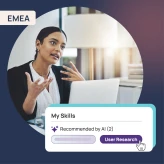
This is precisely the shift Betterworks has built into its latest release. Unified Talent Profiles now auto-populate from a resume or LinkedIn upload and continuously layer in inferred proficiencies drawn from real performance signals, so profiles reflect current capability rather than a snapshot from the hiring process. Managers then verify what the AI surfaces, closing the trust gap that sinks most self-reported skills programs.

Sitting underneath that is the Employee Skills & Skills Graph — a living map of what your workforce can do today and what it's ready to build next, with every skill grounded in evidence (job history, performance data, certifications, feedback) rather than a checkbox. Skills are also mapped against what roles actually require — as required, preferred, or accelerator capabilities — so gaps show up against real business needs, not a generic framework.
The result is a skills inventory that updates itself as work happens, instead of one HR has to rebuild every 12–18 months.
3. Give managers the tools — and the trust — to act on it
Even with better data, skills-based organizations break down at the manager layer if evaluations don't feel fair. Employees need to trust that skills and performance are being assessed consistently before they'll engage honestly with development conversations, let alone support internal mobility that might mean losing them to another team.
That trust is built through calibration — comparing performance and skill evaluations across teams so decisions aren't left to one manager's memory or mood. Betterworks rebuilt Calibration from the ground up this year specifically to make that process fast and transparent rather than a spreadsheet exercise reconstructed once a year: configurable views, real-time talent records, and full visibility into how conclusions were reached, so promotion and development decisions are defensible, not just asserted.

Managers also need structural support to act as talent developers, not talent owners — conversation guides, embedded skills context in 1:1s, and a shift in how mobility is rewarded rather than penalized. Betterworks bakes skills intelligence directly into the coaching workflow so managers see what capabilities are being demonstrated in real time, not just what a resume claims.
4. Connect skills to mobility and succession, not just development plans
None of this matters if verified skills data doesn't ultimately drive decisions — who gets promoted, who's ready for a stretch role, where a critical position is at risk if someone leaves. Betterworks' Succession & Talent Mobility tools connect readiness and skill-gap data directly from the Unified Talent Profile, so succession planning is grounded in current, evidence-based signals instead of a static list reviewed once a year for a handful of leadership roles.

The takeaway
A skills-based organization isn't a framework you install — it's a system that keeps skills data alive, tied to real work, and trusted enough to act on. Start with the business case, replace static inventories with continuously verified data, equip managers to use it, and connect the output to real talent decisions. Organizations that skip straight to a taxonomy exercise end up with a beautifully organized list of skills nobody trusts and nobody uses.
Want to see how Unified Talent Profiles, Skills Intelligence, and Calibration work together in Betterworks?
Book a Demo