Key Takeways
-
Bias in performance management is a systems problem: annual and even continuous reviews still rely on memory and visibility, which predictably disadvantages employees least close to leadership.
-
Real-time performance intelligence—where AI surfaces signals from actual work as it happens—removes the leverage points where bias most easily enters.
-
Structured, evidence-based touchpoints (shared goals, 1:1s, calibration grounded in data) create a fairer default for every employee, not just those most adept at self-advocacy.
-
Making skills visible through real work signals gives leaders a more complete, defensible picture of who's ready to grow—before high-stakes decisions are made.
Every June, organizations across industries make visible gestures toward inclusion. Logos shift. Emails go out. Social posts get scheduled. And for many employees, especially those from historically underrepresented groups, the disconnect between those gestures and their lived experience at work grows more visible, not less.
That gap isn't always a values problem. Often, it's a systems problem.
Think about what a typical performance review actually asks of a manager. Recall six to twelve months of work. Weigh it against criteria that are often vague. Do it for every direct report, usually in the same week. That process doesn't produce an objective assessment. It produces a reconstruction of one, which is a different thing. Reconstructions favor whoever was most visible, most recent, most similar to the person doing the writing.
That's what this piece is about: not the optics of inclusion, but the operational changes that make it real.
The bias hiding in plain sight
The uncomfortable thing about bias in performance management is that it doesn't require bad actors. The system produces biased outcomes on its own, by design, because it was never built to do anything else.
Research consistently shows that performance reviews are disproportionately shaped by recency bias, proximity bias, and affinity bias. Managers recall what happened most recently. They remember people they interact with most often. They rate more favorably the people who remind them of themselves.
For employees who are remote, introverted, members of a minority group, or simply not in the manager's immediate orbit, these dynamics translate directly into lower ratings, fewer development opportunities, and slower career progression—regardless of the quality of their work.
There's also the problem of subjectivity at scale. When performance is assessed in periodic snapshots, managers are essentially asked to reconstruct months of work from memory under deadline pressure. That reconstruction is never neutral. It's shaped by the most recent project, the last conversation, the employee who spoke up most often in meetings. Research on performance review language shows systematic differences in how women and employees of color are described—evaluated on personality traits rather than outcomes, on potential rather than demonstrated contribution.
None of this is surprising once you understand what the system was actually built to do—which wasn't fairness. It was documentation.

Why continuous wasn't enough—and what real-time changes
The shift to continuous performance management addressed a lot of what was visibly broken. More frequent check-ins meant feedback arrived closer to the work. Goal-setting became iterative. Managers had more touchpoints to course-correct before issues became crises.
Even so, continuous performance management still often depends on what managers notice, remember, and choose to document. It made the review cycle more frequent. It didn't fundamentally change what evidence performance decisions were built on.
Real-time performance management is a different model. As Betterworks CEO Doug Dennerline has argued, the next shift isn't just about frequency—it's about the intelligence of the system underneath. When the system is pulling from goals, conversations, and feedback as work actually happens, the performance picture builds itself. The quiet contributor who never lobbied for visibility gets the same evidentiary record as the one who did. That's a genuinely different outcome than what most review processes produce today.

What fair performance actually requires
Getting performance management right on fairness is less about intent and more about infrastructure.
A performance system that structurally reduces bias needs to do a few specific things well:
It needs to build evidence from real work, in real time. When goal progress, feedback, and coaching conversations are captured as work happens, the assessment is grounded in what actually occurred rather than what a manager happened to notice or remember. Recency bias and proximity bias have less room to operate when the record is continuous and visible.
It needs to connect individual work to shared goals. Vague criteria are where bias gets in. When both manager and employee are working from the same visible goals tied to team and business priorities, the conversation has something concrete to stand on. "Did this person make meaningful progress toward what we agreed mattered?" is a harder question to answer subjectively than "how did this person perform?"
It needs to create structured, consistent touchpoints. Informal performance management systematically advantages employees who are most comfortable advocating for themselves, most visible to leadership, or most adept at navigating unwritten norms. Structured 1:1s with clear agendas give managers a consistent framework for coaching every employee—not just the ones who come to them first.
It needs to make calibration fair, not just fast. Calibration sessions are where bias can concentrate at scale—when managers defend their employees based on impression rather than evidence, and when the most persuasive voices win. Research shows calibration meetings can introduce their own forms of bias when they aren't grounded in consistent data. Calibration anchored in real-time evidence produces more defensible and more equitable outcomes than sessions driven by manager narratives assembled on the fly.
It needs to make skills visible beyond self-advocacy. Promotion decisions tend to go to people who are known and visible. That's not a controversial observation; most leaders would admit it. The problem is that "known and visible" correlates strongly with proximity to leadership, having the right sponsor, and working in the right office. Surfacing skills from actual work signals rather than manager impressions or self-reported profiles gives employees who don't have those advantages a fair shot at being seen.
From intent to infrastructure
At Betterworks, the performance signals that come from goals, feedback, check-ins, and conversations aren't just operational data. They're what fair decisions get built on. The more of that signal is captured in real time, the less room there is for bias to fill in what's missing.
When every employee's contributions are tracked against clear, shared goals—and when managers have a consistent, evidence-based picture of performance before coaching or calibration conversations—the assessment is less dependent on who happened to be visible, and more grounded in what was actually accomplished.
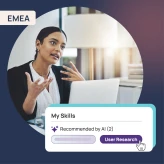
Our Unified Talent Profile builds a dynamic, continuously updated view of each employee's skills, performance, and potential—drawing not just from self-reported data, but from performance signals, feedback, and verified contributions. That means the employee who does exceptional work quietly, in the background, doesn't get overlooked simply because they didn't advocate loudly enough.
Our Calibration capability surfaces consistent, multi-dimensional talent data across your workforce before leaders make decisions—so that high-stakes conversations about promotion, mobility, and succession are grounded in evidence, not in who the most influential manager championed most confidently.
And the real-time foundation underneath all of it—goal alignment, in-the-flow feedback, and structured 1:1 conversations—means performance is captured as it happens, by default, for every employee.
The product matters because of what it stops relying on: memory, visibility, and whoever advocated loudest.
What good looks like
The organizations making the most progress on equitable performance aren't the ones with the most elaborate DEI programs. They're the ones that have built performance systems where:
Every employee's work is visible in real time—not just the work of those with the most access to leadership
Managers coach from evidence, not impression
Calibration is grounded in consistent data, not the most confident voice in the room
Skills and potential are surfaced from real contributions, not self-advocacy alone
Development conversations happen regularly, not just when performance becomes a problem
When performance intelligence is real-time, structured, and evidence-based, it removes the leverage points where bias most easily enters. That doesn't eliminate bias—nothing does in isolation. But it shifts the default from subjective recall to documented contribution.
That's a meaningful structural change. And it's one that benefits every employee, not just the ones who were already winning under the old system.
The work behind the gesture
Inclusion is easy to signal and hard to build. The organizations that do it well don't just change their logos in June. They ask harder questions about what their systems are designed to do, and who benefits when those systems work exactly as intended.
A performance system that rewards visibility over contribution, memory over evidence, and confidence over capability isn't broken. It's working. Just not for everyone.
The question worth asking this month, and every month, isn't whether your organization values inclusion. It's whether your performance system is built to deliver it.
If your performance system isn't designed to surface every employee's contribution in real time, it's time to change the system.
Book a Demo