Last updated: June 2026 | Based on a review of 15+ platforms, G2 data, and Betterworks' 2026 State of Performance Enablement Report
Performance management is at an inflection point. According to Betterworks' 2026 State of Performance Enablement Report — a global survey of 2,387 HR leaders, managers, and employees — 90% of HR leaders say AI has fundamentally redefined what "high performance" means. Yet only 42% of organizations have updated their goals and performance processes to reflect that new reality.
The gap runs deeper than process lag. Executives are six times more likely than their employees to believe their performance systems have kept pace — a disconnect that compounds when the tools HR selects prioritize annual snapshots over real-time intelligence.
How to read this guide: two kinds of buyers, two criteria sets
Not every performance management platform solves the same problem. Before evaluating tools, identify which challenge you're actually solving.
| What you're trying to do | What to prioritize | Best-fit tools in this guide |
|---|---|---|
|
Transformational Connect performance to business execution and strategy |
OKR depth, AI talent intelligence, calibration, manager effectiveness, skills inference | Betterworks, Workday (as performance layer), SAP SuccessFactors (as performance layer) |
|
Maintenance Fix a broken or painful review process |
UX simplicity, adoption, implementation speed, integrations, admin reduction | Lattice, 15Five, ClearCompany, Leapsome |
|
Both Build a performance program and fix the process |
Full platform with enterprise readiness and usability | Betterworks, Leapsome |
The tools below are evaluated against both criteria sets. Each entry notes which buyer profile it serves best.
This guide compares the 10 best performance management software platforms for enterprise organizations in 2026, covering HCM suites, best-of-breed point solutions, and the key questions that should drive your final decision.
Top performance management software tools
The best HR software for performance management depends on your needs. Whether you require employee performance management software for a fast‑growing team or an enterprise‑grade suite for global scale, this snapshot can help you decide.
| Software | Key Features | Ideal Company Size |
| Betterworks | Continuous performance management: Goals, conversations, feedback, calibration. NextGen platform launched Jan 2026: 400+ new features, Manager Command Center, Performance Summaries | 1,000+ employees |
| Workday Performance | Enterprise HCM + performance: Talent reviews, HCM suite | 10,000+ |
| SAP SuccessFactors | SAP HCM clients: Integrated HCM, standardized reviews | 5,000+ |
| Lattice | People success all in one: Performance, goal tracking, lightweight HRIS | 50–1,500 |
| 15Five | Manager coaching and check-ins: Check-ins, performance reviews, manager tools | 100–1,000 |
| PerformYard | Annual review workflows: Formal reviews, templates | 500–2,000 |
| Leapsome | HRIS + performance in one: Goals, reviews, lightweight HRIS | 200–1,000 |
| CultureAmp | Engagement + surveys: Engagement surveys, feedback | 500–2,000 |
| BambooHR | HRIS + performance in one: Lightweight HRIS, performance, add-ons | 50–1,500 |
| ClearCompany | ATS + performance: Recruiting, onboarding, goals | 200–1,000 |
3 approaches to performance management software
Selecting the right tool starts with knowing which type of solution you’re evaluating. These three buckets capture nearly all types of performance management software you’ll encounter. Each category has distinct strengths and trade‑offs.
HCM modules (suite‑based)
Think Workday Performance & Talent Management, SAP SuccessFactors Performance & Goals, or Oracle Fusion Cloud HCM. These modules live inside a broader HR suite, giving you a single contract, one data model, and enterprise‑grade compliance.
Who it’s best for: Large, compliance‑driven enterprises already invested in a suite and wanting a single‑vendor backbone.
Trade‑offs: Twice‑a‑year release cycles, heavy configuration, and multi‑click manager and employee journeys that don’t fit the flow of work — all of these can curb adoption and slow innovation. According to Betterworks' 2026 Performance Enablement Report, fewer than 16% of managers and employees understand their company's AI vision — a challenge that compounds when performance tools require multi-click, back-office interactions disconnected from daily work.
Point solutions (best‑of‑breed)
Specialists like Betterworks, Lattice, 15Five, and Leapsome focus on performance, engagement, and goal setting. They ship features monthly, embed inside Slack and Microsoft Teams, and use AI to summarize feedback or draft goals so managers can spend less time in back‑office portals.
Who it’s best for: Enterprise and high-growth organizations that want continuous performance enablement, monthly feature releases, and AI embedded in the flow of work — not locked behind a twice-yearly HCM release cycle.
Trade-offs: Requires APIs or an iPaaS connector to sync performance data back into HCM suites for comp and talent planning; advanced calibration depth varies by vendor.
Custom/low‑code builds
Some organizations build workflows on ServiceNow, Microsoft Power Apps, or internal portals, offering unlimited control for managing specialized regulatory needs.
Who it’s best for: Companies with unique workflow or compliance requirements, as well as the IT budget to build and maintain their own performance management solution.
Trade-offs: High maintenance costs and slower innovation; total cost can eclipse point solutions within 18 months.
9 Non-negotiable features of performance management software in 2026
A modern performance platform does more than digitize forms. Let’s examine the top features of performance management software so you can focus on what truly matters for your HR performance management software comparison. The following capabilities are non‑negotiable.
1. AI readiness & workforce alignment
The best platforms now embed AI expectations directly into goal frameworks and feedback processes. With 90% of HR leaders saying AI has redefined high performance — but only 42% of organizations updating their processes to reflect that — your platform must actively help close that gap. Look for tools that incorporate AI skill expectations into OKRs and surface whether employees understand how AI connects to their growth.
2. Continuous feedback
Frequent check‑ins between managers and employees curb recency bias, forming the backbone of continuous performance management and quality performance feedback.
3. Dynamic OKRs & goal management
Goal libraries, alignment maps, and progress roll‑ups reinforce company-wide goal alignment and eliminate manual roll‑ups.
4. In-flow integrations
Native apps in Slack, Teams, Gmail, Jira, Salesforce, and other popular tools capture updates where work happens, boosting touch frequency by up to eight times.
5. Multi‑grid calibration & talent analytics
Drag‑and‑drop 9‑box or custom grids visualize performance data, potential, and DEI metrics in one view — no VLOOKUPs required.
6. AI assists
LLM‑powered tools turn raw data into actionable insights, drafting goals and summarizing feedback while flagging bias.
Betterworks' 2026 State of Performance Enablement Report found that executives are 6x more likely than employees to believe performance reviews have kept pace with AI-driven work. The right platform uses AI to close that gap — drafting goals, summarizing feedback, flagging bias, and surfacing coaching moments — so managers spend less time compiling and more time coaching.
7. Role‑based security & compliance
SOC 2, GDPR, and granular permissions protect sensitive data for modern human resources teams.
8. Open APIs & integrations
REST or GraphQL APIs, along with connectors to Workday, SAP, and BI tools, keep data flowing.
9. Configurable templates
Drag‑and‑drop templates let HR launch new check‑ins, project retros, or career discussions without developer help, letting the performance process flex as quickly as the business does.
How to choose performance management software: 5 questions to ask before you buy
Choosing a platform is easier when you start with the right diagnostic questions. Here are the five that separate the right fit from a costly mistake.
1. Will your employees actually use it?
Adoption is the silent killer of performance management initiatives. If the tool isn't embedded in the systems your employees already work in — Slack, Teams, Gmail, Jira — it becomes another portal nobody opens. Betterworks customers report up to 8x higher engagement in performance conversations when tools are integrated into daily work versus standalone portals.
2. Can it handle your org's complexity?
Multi-geo teams, matrixed reporting structures, and regional compliance requirements demand more than a clean UI. Ask vendors to demonstrate how they handle multiple manager relationships, regional data residency, and review exceptions for acquired entities. Betterworks NextGen was specifically built to support these structures.
3. How AI-ready is the platform — and how responsibly is AI deployed?
In 2026, "AI-powered" is a feature claimed by every vendor. Ask specifically: Can AI be enabled by department or region, with governance controls? Does it draft goals and summaries, or just analyze data after the fact? Betterworks NextGen gives administrators fine-grained control over where and how AI is used by supporting phased rollouts without forcing a one-size-fits-all approach.
4. What does calibration look like at scale?
Fair talent decisions at 1,000+ employees require calibration tools that visualize performance, potential, engagement, and DEI data in one grid. If a vendor demo doesn't show you live calibration, ask for it explicitly.
5. What does implementation and change management really look like?
Most enterprise software implementations fail not because of technology, but because of change management gaps. Ask for a realistic implementation roadmap, reference customers in your industry, and understand what the vendor's CSM model looks like post-launch.
The best performance management system for enterprise vs. SMB
Organizational size shapes everything from organizational complexity to budget tolerance. Understanding scale‑driven needs as you’re choosing the right performance management software helps you avoid overbuying or underbuying.
Organizational complexity & goal alignment
Enterprises juggle layered hierarchies and need dynamic goal roll‑ups; SMBs value quick setup over granular hierarchy controls.
Compliance, security, & data privacy
Enterprises face global mandates and need regional data centers; small businesses may accept standard cloud hosting.
Available resources for implementation
Enterprises require change‑management campaigns and integrations; SMBs often prefer tools that admins can “set and forget.”

Top 10 best performance management software choices (2026)
Choosing software isn’t about feature checklists alone. The profiles below outline each vendor’s strengths, best‑fit scenarios, and compromises.
1. Betterworks — Best for enterprises and mid-market companies that need AI-native performance enablement at scale
Betterworks is built for enterprise-scale performance enablement. The platform combines goal management, continuous conversations, real-time feedback, and calibration for fair talent reviews — all deeply integrated into daily workflows. In January 2026, Betterworks launched NextGen — over 400 customer-prioritized features including a Manager Command Center that gives managers a mission-control view of team performance, automated Performance Summaries that synthesize goals and feedback into a clear narrative, and expanded support for multi-geo and matrixed organizations.
Employees and managers can update goals, exchange feedback, and get nudges directly inside Slack, Microsoft Teams, Gmail, Jira, and Salesforce, ensuring performance stays aligned to work in real time.
Betterworks also embeds AI to lighten the load on managers. For example, Conversation Assist helps draft feedback and goals using system data, making coaching and reviews faster and more consistent.
Strengths:
Enterprise depth: Advanced OKR alignment, feedback loops, and calibration tools designed for large, complex organizations.
Flow-of-work adoption: Slack, Teams, and work-tool integrations drive higher usage without forcing employees into a separate portal.
Scalable & secure: Configurable to enterprise HR ecosystems with strong data security and global compliance support.
AI-native and responsibly governed: Administrators can enable AI features by department, region, or group. This supports phased rollouts and regional compliance without a forced all-or-nothing approach.
Trade-offs:
Implementation effort: Requires upfront planning and admin to configure for your business.
Fit for scale: Designed for mid-market and enterprise organizations with 500+ employees.
Industry leaders including Colgate-Palmolive, Intuit, Udemy, and the University of Phoenix rely on Betterworks to manage performance at global scale.
Bottom line: Betterworks is the only purpose-built performance platform with AI-native architecture, bi-directional Workday and SAP SuccessFactors sync, and calibration tools designed for the complexity of 500+ employee organizations — so performance connects directly to how the business executes, not just how HR administers.
Take a product tour of Betterworks.
2. Workday Performance — Best for enterprise HR shops prioritizing a unified source of data
Workday approaches performance management as part of its broader HCM suite. Core features include goal setting, periodic reviews, and talent assessments, all directly tied to compensation and succession planning. For example, ratings and goals can flow automatically into pay or promotion decisions without manual handoffs. Talent review dashboards and 9-box grids are available, leveraging the deep employee data already in Workday. Slack and Teams integrations are supported through Workday Everywhere, though these are notifications and lightweight actions rather than the in-flow goal updates and feedback exchanges available in purpose-built platforms.
Workday’s performance features are structured rather than continuous. While it has added check-in and feedback tools, these remain limited compared with platforms built for ongoing coaching. Current AI in performance is early-stage, although the company has announced plans for AI-assisted summaries and Slack AI integration. Workday's Illuminate AI capabilities, announced in 2024–2025, add AI-generated performance summaries and coaching suggestions — though enterprise customers report these are still maturing compared to purpose-built performance platforms.
Strengths:
Unified system: Fully integrated with HR, payroll, compensation, and succession.
Data integrity & compliance: Strong security and configurability for complex organizational structures.
Enterprise fit: Well-suited for large organizations needing global governance and centralization.
Trade-offs:
User experience: The interface can feel dated and less engaging for employees.
Limited innovation: Continuous feedback, social recognition, and lightweight manager tools are less developed.
Implementation effort: Significant setup and change management required.
AI maturity: Workday's performance AI features remain behind purpose-built platforms, particularly for real-time goal drafting, feedback summarization, and calibration support.
Bottom line: Workday is a natural choice for enterprises committed to an all-in-one HCM strategy. It excels at control, compliance, and integration, but organizations prioritizing agile, employee-friendly performance enablement may find point solution tools more engaging.
3. SAP SuccessFactors — Best for SAP‑centric, highly regulated enterprises
SuccessFactors’ Performance & Goals module delivers enterprise-grade performance management as part of the broader SAP HCM suite. Features include cascading goal management, configurable performance review workflows, calibration, and compliance safeguards such as audit trails, permissions, and digital sign-offs. Performance data flows seamlessly across SAP modules: Ratings and competencies can inform compensation planning, while development goals can trigger learning assignments in SuccessFactors Learning.
AI and automation are emerging but early-stage. Current capabilities include AI-suggested goals and sentiment analysis of performance feedback, with more advanced assistants expected in future releases.
Strengths:
End-to-end integration: Performance connects directly to SAP’s compensation, learning, and talent processes.
Enterprise control: Strong compliance, security, and support for complex organizational structures and regional requirements.
SAP ecosystem alignment: A natural fit for companies already running SAP ERP or HCM.
Trade-offs:
User experience: Interface and workflows are less intuitive than in modern HR tech platforms.
Complexity: Configuration often requires certified consultants, along with significant effort to adapt.
Agility limits: Built for structured, annual processes rather than fast-changing, continuous feedback models.
Bottom line: SuccessFactors is a safe choice for enterprises whose organizational objectives include control, compliance, and integration with the SAP ecosystem. It delivers reliable, standardized performance management at scale, but organizations seeking agility and employee-centric experiences may find it less adaptable. Betterworks is the only purpose-built platform with bi-directional SuccessFactors sync — performance ratings and talent data write back automatically for compensation and succession workflows, eliminating the manual handoffs that make hybrid architectures painful to maintain.
4. Lattice — Best for SMBs looking for a fast rollout
Lattice positions itself as an all-in-one “people success” platform: combining performance management, goal tracking, engagement surveys, and lightweight career development and compensation tools. Core features include performance reviews with 360 feedback, 1:1 meeting agendas, real-time feedback and praise (often via Slack), goal and OKR tracking, and integrated engagement surveys. Lattice offers “Grow” for career pathing and a basic HRIS for small companies without a separate system.
Slack, Microsoft Teams, Gmail, and Outlook are among integrations for feedback and reminders, while HRIS systems are covered with Workday, Namely, and BambooHR. The user experience is a differentiator: Lattice is designed to be clean and engaging, encouraging frequent dialogue rather than infrequent reviews. Lattice has expanded AI capabilities significantly in 2025–2026, including AI-powered manager insights, automated survey analysis, and a broader AI agent offering. Enterprise buyers at 1,000+ employees, however, often find calibration and analytics depth insufficient for complex talent planning at scale.
Strengths:
Broad coverage: Performance, goals, engagement, career growth, and light HRIS in one platform.
User-friendly design: Modern interface encourages adoption across employees and managers, transparency, and frequent feedback.
Quick implementation: Can be set up in weeks with strong best-practice resources.
Trade-offs:
Depth for scale: Calibration and analytics are sufficient for mid-market but not as robust as enterprise systems.
Limited HRIS scope: Payroll and complex time/attendance remain outside its capabilities.
Pricing model: Per-employee pricing can become significant as headcount expands.
Enterprise calibration limits: Calibration features that work well for SMBs and mid-market teams can feel constrained for enterprises with complex multi-department, multi-region talent reviews.
No native HRIS: Lattice discontinued its HRIS product, so all customers need a separate system of record for payroll, benefits, and core employee data.
Bottom line: Lattice is best for small to midsize companies seeking a modern, easy-to-adopt platform that blends performance, goals, and engagement. It optimizes for usability and culture-building over enterprise-scale depth.
5. 15Five — Best for SMBs prioritizing coaching and manager enablement
15Five takes a lightweight, continuous approach to performance. Its weekly check-in model — 15 minutes for employees to share updates, five minutes for managers to review — keeps a steady pulse on progress, morale, and challenges. The platform also includes peer recognition through “High Fives,” 1:1 meeting agendas, goal setting with basic OKRs, and a performance review module.
Recent additions include Manager Effectiveness Indicator dashboards and Spark AI, which helps analyze check-in comments and draft review summaries to save time. 15Five's 2026 release introduced AMAYA, a conversational AI agent that lets HR leaders and managers ask natural-language questions across all platform data — surfacing engagement risks, performance patterns, and recommended actions without navigating reports.
Strengths:
Continuous check-ins: Simple weekly updates make feedback and recognition part of the routine.
Manager focus: Tools and dashboards help managers build accountability and effectiveness.
Ease of adoption: Designed to be intuitive and lightweight for employees and managers; start with check-ins, and add reviews or goals as needed.
Trade-offs:
Scope limits: Goals and reviews are functional but not as advanced as specialist OKR or enterprise systems.
Analytics depth: Reporting is relatively simple compared to larger platforms.
Fit: Best suited for organizations ready to practice continuous feedback instead of annual reviews.
Bottom line: 15Five is a practical choice for small and midsize companies that want a straightforward, positive way to build feedback and recognition into weekly routines. It’s not designed for heavy process customization or enterprise-scale analytics, but it excels at keeping teams connected and managers engaged.
6. PerformYard — Best for organizations committing to periodic reviews
PerformYard is a dedicated performance management platform focused on making evaluations straightforward. It offers customizable review templates, flexible cycle scheduling (annual, project-based, 360 feedback), and automated reminders to streamline compliance. HR can track review progress centrally, nudging managers as needed. The platform includes goal setting, basic feedback and recognition, and competency libraries for review design.
Its interface is simple and practical, leaning toward structured processes over social engagement. Integrations cover core HR systems for employee data sync and Slack or Teams for recognition posts, though most usage happens directly in the platform.
Strengths:
Focused, flexible reviews: Streamlines evaluations with customizable workflows and automation, as well as different review cycles.
Ease of adoption: Straightforward design and strong customer support, including dedicated success managers.
Value: Priced competitively for HR teams moving away from spreadsheets.
Trade-offs:
Limited scope: No engagement surveys, advanced OKRs, or compensation tie-ins.
Basic analytics: Reporting is functional but not highly advanced.
Traditional focus: Better suited to structured review processes than continuous enablement.
Bottom line: PerformYard is a practical performance management solution for HR teams that want reviews online, automated, and consistent. It’s a good fit for budget-conscious organizations focused on compliance and documentation, but it’s less suited to companies pursuing continuous feedback and talent development.
7. Leapsome — Best for fast-growing mid-markets with a global footprint
Leapsome is a people enablement platform that connects performance, engagement, and learning in one system. Core modules cover performance review processes, including 360 feedback, goals and OKRs, 1:1 meeting tools, engagement surveys, and a learning library. This integration allows companies to link performance insights directly to growth — for example, a review highlighting a skill gap can lead to a learning course within the same platform.
Leapsome is multilingual (English, German, French, and more), making it attractive for international teams. Goal and OKR management is a standout: Cascading goals sync with work tools like Jira to automatically update progress, while Slack and Teams integrations support real-time reminders and feedback. HRIS connections (Personio, BambooHR, Workday) handle data sync. AI features are emerging, such as sentiment analysis on survey responses and content recommendations based on skills gaps.
Strengths:
Unified workflow: Combines performance, engagement, and learning in a single platform.
Global support: Strong onboarding and responsive support, while multilingual and localized features serve international teams
Automation: Tools like auto-scheduling and nudges reduce HR admin work.
Trade-offs:
Tiered access: Advanced features like calibration are limited to premium plans.
Breadth vs. depth: Covers multiple areas effectively but may lack the specialized depth of focused tools (e.g., Culture Amp in surveys, Workday in compliance).
Track record: Leapsome has a strong European customer base but less enterprise proof-of-scale than legacy providers for organizations with 5,000+ employees.
Bottom line: Leapsome is a strong option for mid-market firms, especially those in Europe or with global workforces that want to connect performance, engagement, and development in one modern platform. Larger enterprises or highly specialized buyers should weigh whether its offerings go deep enough for their long-term needs.
8. Culture Amp — Best for enterprise orgs prioritizing employee experience
Culture Amp built its reputation in engagement surveys and feedback, then extended that expertise into performance management. Its performance module includes reviews (self, manager, and 360 feedback), goal tracking, continuous feedback, and 1:1 tools integrated with engagement data.
Culture Amp’s people science foundation includes research-backed review templates, survey questions, and benchmarks. Performance outcomes can be correlated with engagement results, giving leaders visibility into how sentiment drives performance. Employees can request skill-based feedback, and managers can track team members’ skill gaps. AI capabilities have expanded significantly — AI Coach in Performance is now generally available, offering coaching suggestions and guided insights, while Feedback Summaries and calibration tools now support multi-cycle historical comparisons. Integrations cover HRIS platforms and Slack for reminders and quick feedback, although work tools like Jira or Salesforce are limited.
Strengths:
People analytics expertise: Research-driven templates, benchmarks, and survey science guide practice.
Engagement & performance: Unified platform connects employee sentiment with performance outcomes.
Community & resources: The Culture First network provides peer learning and practical support.
Trade-offs:
Performance depth: Goal features and review workflows are less customizable than specialist HR tools; compensation planning isn’t included.
User experience: Clean but utilitarian interface in performance compared to the survey side.
Value fit: Best for companies using both engagement and performance; less compelling if you only need performance management.
Bottom line: Culture Amp is the right choice if you believe engagement drives performance and want research-backed insights to prove it. Its strength lies in connecting people analytics with performance, though its performance module is less feature-rich than dedicated platforms.
9. BambooHR — Best for SMBs wanting an HRIS and simple performance tracking
BambooHR is best known as an HRIS for small and midsize businesses, with performance management offered as an add-on module. The module includes customizable review forms, simple goal tracking, feedback notes, and e-signatures for reviews. Integration with the core HR system means performance tasks appear alongside everyday HR functions like PTO and onboarding.
Performance data connects to HR records for basic analytics, such as comparing ratings with tenure or tracking completion rates. Integrations cut across BambooHR’s ecosystem, with some Slack connectivity available via third-party connectors. The performance module is straightforward, focusing on ease of use rather than advanced features.
Strengths:
Seamless integration: Built directly into the BambooHR platform with no extra setup.
Simplicity: Easy for HR to enable and for employees to adopt.
All-in-one records: Performance data is stored alongside broader employee history.
Trade-offs:
Limited functionality: No OKR alignment, calibration, or advanced feedback features.
Minimal analytics: Basic reporting only.
Traditional cadence: Best for annual employee reviews rather than continuous feedback models.
Bottom line: BambooHR’s performance module is a convenient option for small businesses already using BambooHR as their HR system. It provides the essentials for documenting goals and reviews, but companies seeking continuous feedback or deeper analytics will likely outgrow it.
10. ClearCompany — Best for mid-market teams looking for an ATS + performance combo
ClearCompany brings performance management into a broader talent suite. Alongside recruiting and onboarding, it offers reviews with customizable forms and 360 feedback, goal setting and tracking, recognition, and engagement surveys. The common thread is alignment: Defined hiring competencies flow into scorecards and later into evaluations, creating continuity from candidate to employee.
Because ClearCompany started as an applicant tracking system, it works for companies that want recruiting and performance data in one place — for example, to see whether high-scoring candidates become high-performing employees. Its integrations cover HRIS and recruiting systems, though daily usage happens mainly inside ClearCompany’s platform. Slack and Teams connections are limited. Meanwhile, its performance module hasn’t made AI a centerpiece.
Strengths:
Unified platform: Recruiting, onboarding, goals, performance, and engagement in one system.
Consistency: Shared competency models keep definitions of good performance aligned across the lifecycle.
Support: Experienced team helps customers adopt both recruiting and performance workflows.
Trade-offs:
Breadth over depth: Covers the major performance functions but lacks some of the polish and advanced features of tools like Lattice or 15Five.
User experience: The Interface can feel dated and less engaging for employees.
Global reach: Best suited for U.S. customers; global enterprises should check for language support and compliance needs.
AI depth: ClearCompany has not made AI a centerpiece of its performance module — a growing gap as enterprise buyers increasingly prioritize AI-assisted review writing, goal drafting, and bias detection.
Bottom line: ClearCompany is a strong choice for midsize organizations that value an integrated talent platform. You gain simplicity and alignment across the employee lifecycle, with the trade-off of fewer cutting-edge features in performance enablement.
5 performance management trends reshaping HR in 2026
Performance management is shifting from annual, backward‑looking forms to always‑on, data‑driven talent management loops. These features support that transition at scale.
AI‑generated development plans
LLMs can be used to analyze goals and feedback to draft personalized development plans, making development planning more efficient. With 49% of HR leaders ranking AI skills as a top influencer on employee performance — but only 9% of employees agreeing — the platforms that connect AI skill expectations to development planning will define the biggest talent gap of 2026.
Predictive turnover‑risk alerts
Combining engagement signals and performance cadence, leading platforms generate turnover‑risk scores so HR can intervene early.
Skills marketplaces powered by performance data
Verified achievements feed internal marketplaces, matching employees to gigs and succession roles.
Voice‑to‑text feedback sentiment
Live transcription converts spoken feedback to text while flagging tone issues, which improves performance evaluation quality.
DEI‑aware calibration metrics
Diversity data overlays in calibration grids can prompt managers to revisit outliers before signing off. Betterworks' calibration grids support DEI data overlays natively, allowing calibrators to review demographic distribution before finalizing ratings — a capability driving platform selection among enterprises with formal DEI audit requirements.
Why Betterworks is the best performance management software for enterprise businesses (2026)
The performance management category is full of tools that automate the review cycle. What enterprises actually need is a system that connects performance to how the business executes — and adapts as strategy shifts. Here's the evidence that Betterworks leads the category.
Betterworks by the numbers:
31% improvement in goal quality with AI-assisted goal writing
60% reduction in manager prep time for reviews
Reviews shrinking from 1 hour to as little as 15 minutes per employee
30+ point increase in performance reviews completed on time
89% manager/employee satisfaction when performance process includes AI
Real‑time visibility in the flow of work
Native apps in Slack, Teams, Gmail, Outlook, Jira, and Salesforce keep updates inside your organization’s daily tools, fostering a culture of continuous alignment. Betterworks customers report up to 8x higher touch frequency on performance conversations when using in-flow integrations versus standalone portals, keeping teams aligned without adding process overhead.
AI‑assisted goals & feedback
Goal Assist and Feedback Summaries have helped customers boost goal quality by 31% and cut manager prep time by 60%. Customer-reported improvements include an increase of 30+ points in performance reviews completed on time, as well as review completion shrinking from an hour per employee to as little as 15 minutes.
Guided conversations
Configurable templates, tone coaching, and HR‑only fields protect sensitive data and foster a culture of constructive feedback.
Powerful calibration & talent review
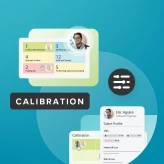
Interactive grids combine performance, potential, engagement, and DEI data in one view, complete with one‑click board exports.
Future‑ready skills & mobility
An AI‑driven skills engine auto‑populates talent profiles and recommends stretch projects, promoting internal mobility.
Built for enterprise complexity at scale
Betterworks NextGen supports multi-geo environments and matrixed manager structures, enabling multiple leaders to contribute to goals, feedback, and performance evaluations without slowing down the review cycle. For enterprises that have grown through acquisition or operate across regulatory regions, this is a critical differentiator. Responsible AI governance lets administrators enable AI features by department, region, or group -- so no organization has to choose between innovation and compliance.

See Betterworks in Action
Performance management in the AI era requires more than a new tool. It requires a platform built for continuous alignment, coaching at scale, and the workforce complexity of global enterprise.
Betterworks is trusted by HR leaders at Colgate-Palmolive, Intuit, Udemy, and the University of Phoenix. The NextGen platform — launched January 2026 — brings 400+ enterprise-requested features, an AI-native architecture, and the industry's deepest calibration tools.
[Take an Interactive Product Tour — Start in 60 seconds, no form required →]
Performance management software FAQs
What is performance management software?
Performance management software is a platform that replaces disconnected annual reviews with a continuous system for goal alignment, real-time feedback, manager coaching, and fair talent calibration. The best platforms embed these workflows into tools employees already use — like Slack, Teams, and Jira — so performance becomes part of daily work, not a separate annual event.
What's the difference between performance management software and an HCM suite?
HCM suites like Workday and SAP SuccessFactors offer performance as one module within a broader HR system, prioritizing data centralization and compliance. Purpose-built performance platforms like Betterworks ship new features monthly, embed AI coaching into daily workflows, and drive higher adoption by living inside existing tools. Many enterprises run both: an HCM for system-of-record data and a best-of-breed platform for engagement, coaching, and continuous alignment.
What features should I prioritize when evaluating performance management tools?
Prioritize in-flow integrations (Slack, Teams, Jira), AI-assisted goal and feedback writing, calibration depth with DEI overlays, and open APIs for HCM data sync. For enterprise buyers specifically, also evaluate: multi-geo and matrix manager support, configurable AI governance, and the vendor's track record with organizations at your complexity level. See the full feature list for Betterworks →
How long does it take to implement performance management software?
Implementation timelines range from 4–6 weeks for SMB point solutions to 3–6 months for enterprise deployments with deep HRIS integrations and full change management programs. Betterworks offers dedicated professional services and customer success support — most enterprise customers complete core configuration within 8–12 weeks.
What is continuous performance management?
Continuous performance management replaces the annual review cycle with an always-on system of goal check-ins, real-time feedback, and structured coaching conversations throughout the year. Research consistently shows it reduces recency bias, improves engagement, and leads to more accurate talent decisions. Betterworks was built from the ground up on a continuous performance model. Learn more →
How is AI changing performance management in 2026?
According to Betterworks' 2026 State of Performance Enablement Report, 90% of HR leaders say AI has redefined what high performance means — yet executives are 6x more likely than employees to believe their performance systems have kept pace. The best AI-powered platforms in 2026 embed AI into goal writing, feedback summarization, calibration bias flagging, and development planning, while giving HR the governance controls to roll out responsibly.
Is Betterworks right for companies under 1,000 employees?
Betterworks is built for organizations that take performance seriously. The platform is designed to handle complexity: multi-geo teams, matrixed structures, and deep HCM integrations. That said, mid-market companies often find Betterworks particularly valuable precisely because they're building their performance culture at the moment it matters most — before the complexity compounds. Growing organizations that implement Betterworks at 500 employees don't face a costly re-implementation at 2,000.