Why modern HR leaders need always-on visibility into bench strength, readiness, and talent risk
A critical role opens. A leader exits unexpectedly. A business priority shifts overnight.
And the question lands immediately: Who can step in right now?
This is where most succession plans fail — not because they don’t exist, but because they’re already outdated when they’re needed.
Succession planning has traditionally been treated as an annual exercise. But leadership risk doesn’t follow the calendar. Organizations that rely on static plans are often left scrambling, even when they believed they were prepared.
The real question isn’t whether you have a succession plan. It’s whether you can name credible successors for your most critical roles today.
Why annual succession planning is no longer enough
Succession planning has always been about leadership continuity — identifying and developing internal talent to fill critical roles and reduce disruption.
But the operating reality has changed.
Leadership turnover is accelerating. For example, large public companies have seen CEO succession rates rise above historical averages, with projections reaching around 13% annually in recent years.
At the same time, most organizations are not structurally prepared. Research suggests that as many as 81% of companies lack a formal succession plan, leaving significant gaps in leadership coverage.
Even when plans exist, they often rely on:
Static performance reviews
Manager recollection
Fragmented or self-reported skills data
The result is predictable: plans that are out of sync with the workforce they’re supposed to represent.
A succession plan that is updated once a year is almost always out of date when it matters most.

Succession planning is a business continuity issue — not an HR exercise
Succession planning is fundamentally about risk management.
Organizations that neglect it face:
Leadership gaps that disrupt execution
Loss of institutional knowledge
Increased external hiring costs
Lower employee confidence and retention
CIPD and AIHR both emphasize that succession planning exists to ensure continuity of critical roles and organizational stability during transitions.
And research from the Center for Creative Leadership shows that companies with proactive succession strategies outperform and outlast competitors, because they treat leadership pipelines as a strategic asset — not a compliance task.
Yet most organizations still treat succession as a periodic review instead of an always-on discipline.
That gap is where talent risk lives.
What modern succession planning requires instead
If succession planning is going to support real business decisions, it has to operate continuously.
That requires a shift from static plans to dynamic talent intelligence.
Modern succession planning must:
Reflect real-time performance, not last quarter’s summary
Account for evolving skills, not static job profiles
Show readiness as a spectrum (ready-now, ready-soon, not ready)
Surface development gaps that can be actively addressed
Provide clear visibility into bench strength across critical roles
Bench strength is not an HR metric. It is a direct indicator of business risk.
Organizations that do this well are not guessing who might be ready. They know — with evidence grounded in actual work.

What HR leaders should be able to see in real time
To move from planning to execution, HR leaders need immediate answers to a few core questions:
Where do we have strong successor pipelines — and where are we exposed?
Who is ready now vs. ready soon for each critical role?
What skills or experiences are missing across our bench?
How quickly could we fill a role internally if needed?
These are not theoretical questions. They are operational ones.
Metrics like bench strength ratio, successor coverage, and time-to-fill are now essential to workforce planning because they reveal both readiness and vulnerability in the talent pipeline.
Without this visibility, succession planning becomes reactive by default.
How Betterworks operationalizes modern succession planning
This is the shift Betterworks is designed to support.
Our Spring 2026 release centers on Talent Intelligence powered by performance — a dynamic, real-time understanding of people grounded in actual work signals, not static profiles.
In practice, that changes how succession planning works.

With Betterworks, HR leaders can:
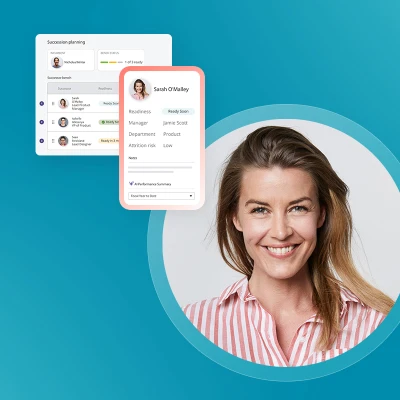
Build succession plans based on live, dynamic talent profiles
Search across the workforce to identify likely successors
Define and track ready-now and ready-soon talent
Surface skills gaps and development plans tied to readiness
Build and maintain pipelines for critical roles
Instantly spot roles with insufficient bench depth
This is not about maintaining a document. It’s about enabling decisions.
Because talent intelligence is continuously updated — from goals, feedback, performance, and calibration — succession planning reflects the workforce as it actually exists today.
That’s what allows leaders to move faster, align decisions across teams, and defend those decisions with evidence.
From static plans to live pipelines
The organizations that handle leadership transitions best don’t wait for a vacancy to test their succession strategy.
They already know:
Where they’re strong
Where they’re exposed
Who is ready
What development is needed next
Succession planning should run at the speed of talent risk — not the speed of an annual review cycle.
Betterworks helps HR leaders make that shift — moving from static succession plans to continuous, data-informed pipelines for critical roles.
See how Betterworks helps you build stronger successor pipelines before it impacts the business.
Book a Demo