Diversity, equity, and inclusion (DEI) are central to your employee experience, culture, and ability to recruit and retain talent. But while many organizations talk about DEI initiatives, they don’t always follow through with concrete actions and policies. Why does DEI become an afterthought?
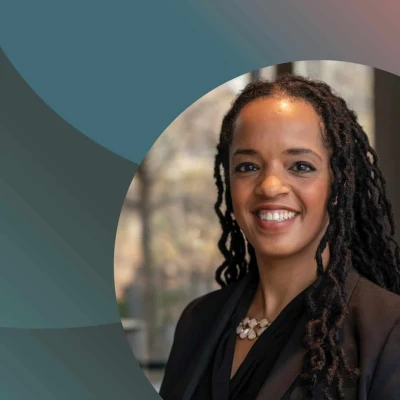
The problem is that DEI work isn’t always treated with the same degree of organizational value as other human resources work, says Dr. Stephanie J. Creary, an assistant professor of management at the Wharton School of the University of Pennsylvania, who researches how organizations can become more inclusive and equitable — and the relational practices that will create these outcomes.
She argues that organizations need to elevate DEI to an enterprise-wide initiative. “For some people who only understand [DEI] as a personal experience and a personal perspective, it’s hard to make that leap to understanding it as a set of initiatives and valuable programs in a strategy that helps an organization to achieve not only its economic goals but also its social goals,” she says.
Creary joins us for a Dec. 6 webinar as part of our People Fundamentals webinar series, where she’ll share insights into the research she has done on DEI and organizational change, as well as advice on how HR leaders can incorporate that research into their work to achieve their goals.
Introducing the MERIT framework
Many leaders see the value in DEI initiatives but still find themselves struggling to make progress in implementing them across their organizations. To help them close that gap, Creary developed the “MERIT” framework, which is broken down into five steps:
“Work doesn’t get done if people aren’t taught to value the work that they’re doing, if they’re not incentivized or motivated in any way to do it,” Creary says. “And so the core of this MERIT framework is first and foremost taking a structural approach to talking about DEI as a set of organizational practices.”
Successful DEI initiatives require formally established roles, responsibilities, people, and resources. HR leaders can incentivize employees with rewards, including praise, compensation, and opportunity. HR must also consider how DEI-related performance fits into employee evaluations and promotion decisions.
“My research around this is about, let’s not make DEI the peripheral work or the side hustle,” Creary says. “What do we need to do to make DEI, as part of our roles and responsibilities, feel as core to us as the other things that we wake up each day knowing that we have to do when we get to work?”
Breaking down DEI and HR silos
DEI and HR used to exist as separate functions, but that structure has shifted in recent years, Creary says.
“The blurring of the lines between these formerly distinct functions is increased. We’re starting to see HR, in this case, understand where its roles and responsibilities are when it comes to DEI,” she says. “We’re also seeing where DEI leaders understand their role and responsibilities when it comes to talent and other HR practices.”
With HR and DEI increasingly integrated, they can think holistically about embedding DEI into every level of the organization, starting with strategic planning and resource allocation. When the C-suite prioritizes DEI, managers notice that and are more likely to buy in.
“At the people manager or people leader level, we’re looking for them to think within the structure of what’s available in their organization, what the opportunities are,” Creary says. “How do they help ensure that the people on their team — people who are not in leadership roles — understand how to contribute to their organization and that if they contribute to their organization, that will be valued?”
Diagnosing DEI breakdowns
When DEI initiatives don’t produce the expected results, it’s not necessarily because people don’t care, Creary says.
Often, the process is incorrect or ineffective from the start. An incomplete organizational plan, a lack of resources, or treating DEI as an afterthought can lead to lackluster results.
“Part of the problem is, a lot of people who are creating these initiatives either don’t think about DEI in the structured, process-oriented way that we’ve been talking about,” Creary explains, "or they lack the experience to understand how to turn this from a passion project to something that is sustainable and effective — something that helps an organization to do better and build a better culture.”
To learn more about the MERIT framework and how Creary advises HR leaders to strengthen DEI initiatives, register for our webinar today.