If someone cleared your phone's contact list, how many people could you call? For most adults, the answer is two or three — one of them a childhood home number memorized before smartphones existed. The rest are gone because we stopped needing to memorize them.
Tools have always reshaped human capability, going back to fire. Heather McGowan wants us to consider if we are ready for what's next on the list. "We've been so focused on what we're going to do with the tool," she says. "We're not thinking about what the tool is doing to us."
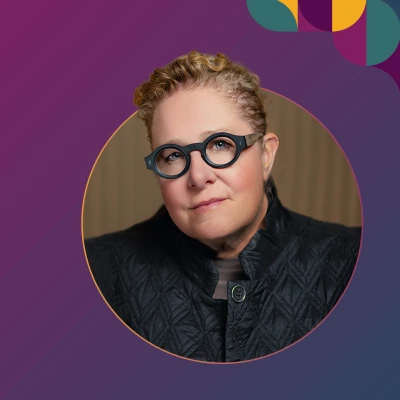
McGowan is a futurist, bestselling author of The Adaptation Advantage and The Empathy Advantage, and the person New York Times columnist Thomas Friedman calls "the oasis" on the future of work. We sat down with her ahead of her keynote at EmpowerHR 2026 to find out what she wants HR leaders to consider before they hand off another task to AI.
AI is changing more than the way we work
Every transformative tool in human history has changed not just how people perform a task, but who they are — how they think, how they relate, how they reason under pressure. AI is no different.
"We're starting to lose the ability to sit with uncertainty," Heather says, "because we can ask an LLM anything and it'll give us an answer. So we're not struggling with 'what if.'"
There's value in intentionally engaging in that struggle, she argues. "Productive friction is essential to learning. Productive friction is also essential to relationships."
What you automate, atrophies
When we stop doing hard cognitive work ourselves, we lose the capacity that comes from doing it.
That shows up in more places than our ability to memorize phone numbers, research finds. The occupations with the lowest rates of Alzheimer's disease aren't lawyers or surgeons, Heather noted. They're taxi drivers and ambulance drivers, because they spend their working lives rerouting through physical space, constantly remapping their environment, rebuilding neural pathways as they go. GPS removes that exercise. The protection goes with it.
The same dynamic applies to how we make talent decisions inside our organizations. The candidate whose curiosity doesn't show up on a CV — the one who figures things out in the hard moments — gets filtered out when AI skims the same signals that were already measuring the wrong things. "If we're just using it to surface-skim on the old benchmarks, because we're often measuring the wrong stuff," Heather says, "we're going to miss the important stuff."
The decisions AI can't make for you
Her role model for personal accountability in the age of AI: Admiral Hyman Rickover — the father of the U.S. nuclear navy, who ran a fleet for decades without a single reactor accident. His philosophy was simple: responsibility cannot diffuse into a system. It has to live in a person.
When organizations stop exercising human judgment on promotions, on development, on who stays and who goes, that judgment atrophies just like spatial memory does when you stop navigating city streets. And when the system is unavailable, there's no one who knows how to do it anymore.
"Somebody's got to put their name on the line," Heather says.
Heather McGowan will deliver the opening keynote at EmpowerHR 2026 on May 6.
Register to attend